
Panagia Odigitria, Monastery,
West Crete
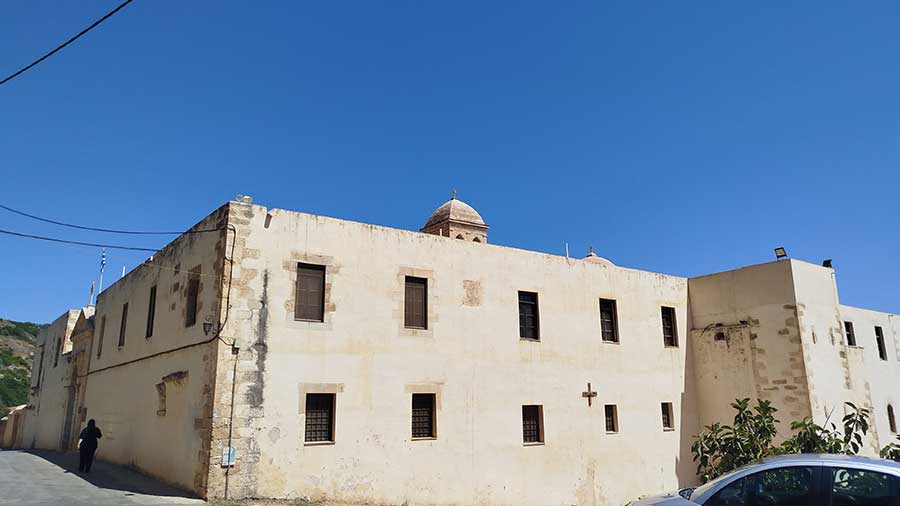
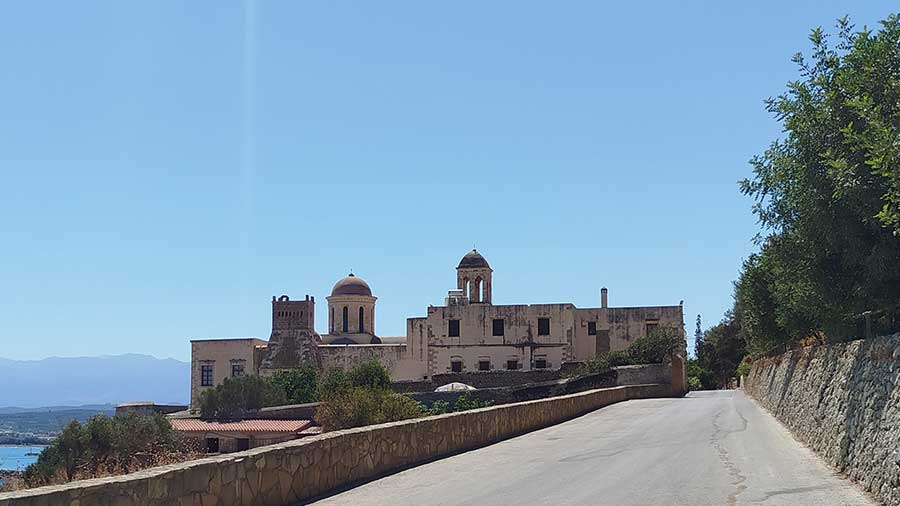
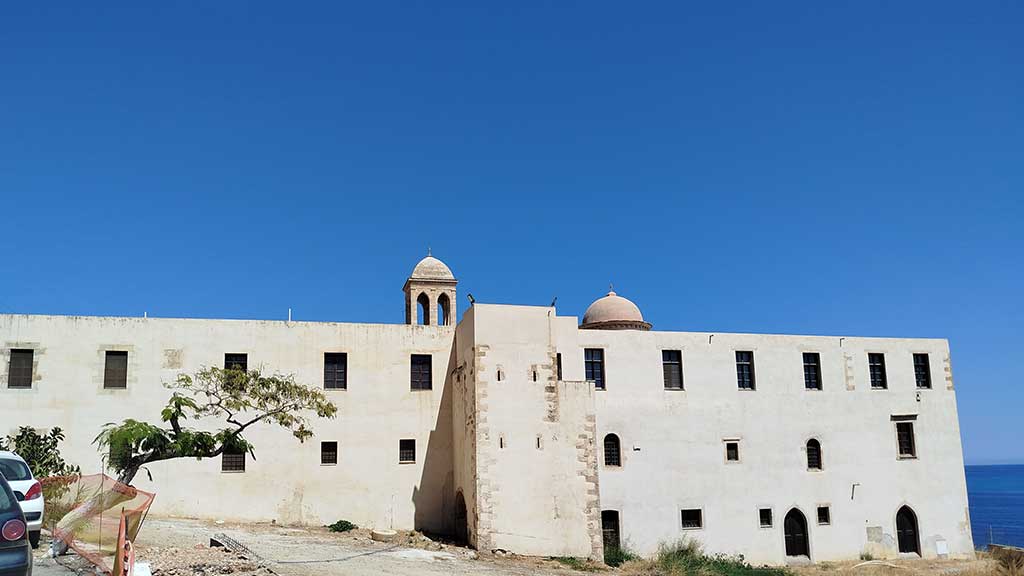
The Monastery of Our Lady of Gonia (Odigitria)
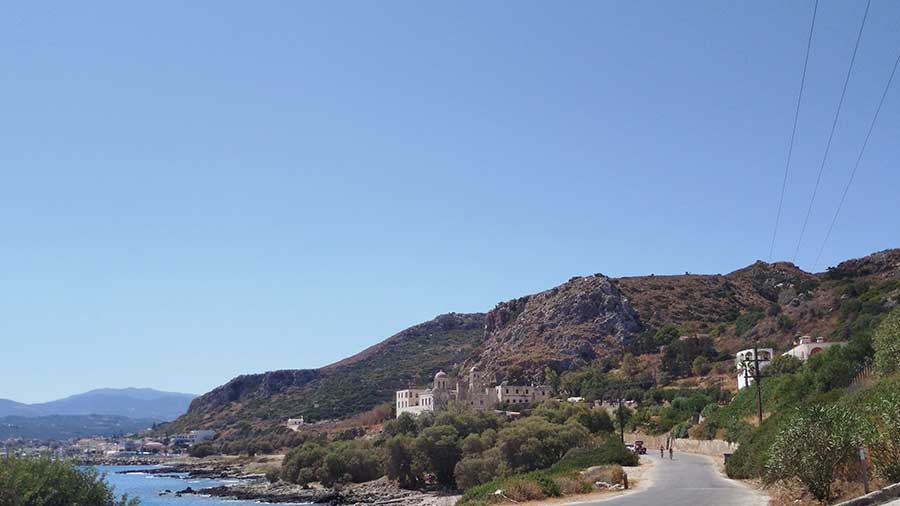
The Monastery of Our Lady of Gonia is a men’s stauropegic monastery located near Kolymvari, in western Crete. It stands at the edge of the Bay of Chania, about 25 kilometers west of the city of Chania. Close to the monastery lies the Orthodox Academy of Crete.
History
The monastery was originally founded in the 9th century AD at the site of Menies on the Rodopou Peninsula, where the ancient sanctuary of the goddess Diktynna once stood. It was dedicated to Saint George. Due to frequent pirate raids, in the 13th century the community moved further south, establishing a small monastery on the grounds where the present-day cemetery is located.
The monastery in its current position was founded in 1618 by the monk Vlassios, who came from Amasia in Cyprus. Reconstruction work was later continued by Benedict Tzagarolas, with significant financial support from Georgios Mourmouris. The main church was completed in 1634, as recorded on an inscription on the western side of its dome.
During the Cretan War, the Ottomans landed near the monastery in 1645, captured it, and later destroyed it in 1652. In 1662, by decree of the Ecumenical Patriarchate, the monastery was declared stauropegic—meaning it came directly under the jurisdiction of the Patriarch of Constantinople. A school was founded there in 1664. The monastery’s fountain was built in 1708, and in 1805 its chapels were added.
During the Greek War of Independence in 1821, the monastery served as a hospital. The abbot, Parthenios Raspanis, became a member of the secret society Filiki Etaireia, but he was arrested and imprisoned by the Ottomans. The monastery fell into decline until it was restored between 1831 and 1841 by the monk Parthenios Froudakis. It was again destroyed by the Ottomans in 1867 during the Cretan revolt of 1866.
In 1897, Timoleon Vassos landed south of the monastery with two infantry battalions, an engineering corps, a company of Evzones, and a mountain artillery unit, claiming Crete in the name of the King of Greece. His landing was the spark that ignited the Greco-Turkish War of 1897, and the monastery became his headquarters. The present-day bell tower was built in 1899, and in 1935 the monastery was declared a protected heritage monument.
During World War II, after the fall of Athens, the Hellenic Military Academy briefly relocated to the monastery. Following the Battle of Crete, the Germans seized the site, expelled the monks, and turned it into a military camp until 1944. The monastic community was only partially re-established during this period.
In the 1960s, part of the monastery’s land was granted for the construction of the Orthodox Academy of Crete, which began operating in 1968.
Info box
Coordinates (DD): 35.55054478929368, 23.77675187641048